
Council’s Proposals for Disposal of Public Land
Below are the Trust’s submissions to two recent proposals from Hunters Hill Council:
Planning Proposal, 4 Pittwater Road, Gladesville
This site, owned by Hunters Hill Council, is located next to the Gladesville Library and is occupied by Gladesville Occasional Child Care Centre, a not-for-profit community-based child care centre. The property falls within Ryde Council who recently sought feedback on Hunters Hill Council’s proposal to reclassify the site from ‘Community’ to ‘Operational’ land to enable future development or sale. The Trust does not support the reclassification and our submission to Ryde Council is HERE. Our main objections are:
a) The proposal is not the result of Hunters Hill Council’s Property Strategy as indicated. This Strategy was not endorsed and Council papers from July 2021 state that that the Property Strategy was no longer being progressed.
b) The land is currently being used for a valuable community service, Gladesville Occasional Care Service, which provides an affordable type of care, has been operating since 1983 and is only one of three childcare services providing this type of care in Gladesville.
c) The loss of this service would impact families, particularly low-income families in the decades to come. Extensive research has shown the value of early education in child development and Hunters Hill Council has recognised the value of this service by awarding community grants to the service over each of the last four years. Yet it appears that Council has not provided any assurances that the service would be relocated. Their Proposal now envisages that the best use of this site would be for residential and commercial outcomes, which is not consistent with maintaining a community based service.
The Trust believes that Ryde Council should not support this proposal at Gateway Determination and instead retain the Gladesville Occasional Care Service in its current location.
Disposal of Council Land Policy: Proposal
Hunters Hill Council is proposing to pass a resolution stating that the following 4 parcels of land are surplus to the current or future needs of the Council and the local community and have potential for disposal:
- 24 Gale Street and 527sqm at 16C Vernon Street
- 16C Vernon Street, Hunters Hill – Lot 31 DP 1040602
- Church Street (Cnr Reiby Road), Hunters Hill – adjoining 12 Church Street, Hunters Hill
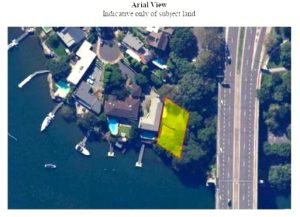
- Land between 22 and 24 Gale Street, Woolwich – waterfront
Our submission regarding this policy is HERE and our main objections are:
a) The Trust takes the view that the disposal of any Council land must be assessed on an individual basis. There has been no explanation as to why these particular four parcels of land are being grouped together, given the disparity in size of 14sqm at 22-24 Gale Street and 527sqm at 16C Vernon Street.
b) We are particularly concerned about the sale of 16C Vernon Street located on the Lane Cove River waterfront. Council’s 29 July 2024 Report incorrectly describes it as ‘accessible only by the adjoining owner‘. An on-site visit clearly demonstrates that this tract of land between the neighbouring property and Serpentine Road Reserve is easily accessed via the Serpentine Rd Road Reserve. Unfortunately, the access has never been improved by Council even though nearby signs point to the Great North Walk and Mornington Reserve further along the shoreline.
c) When assessing whether the land is currently used or required for use in the future for community or public recreation purposes, Council’s Report states ‘The land is deemed to be cost prohibitive to become an active or passive recreational space‘. The Trust asks, how has this been assessed and is the estimate of cost available to the community?
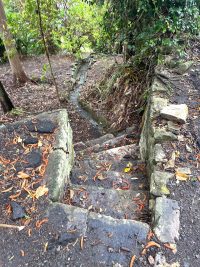
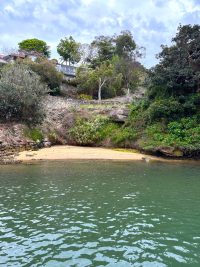
This waterfront site is a significant parcel of land that cannot be classed as “remnant”. The Trust believes the potential disposal of this land is short-sighted and strongly advocates keeping foreshore land in public hands so that future generations of Australians can continue to have access to enjoy and explore their natural history and inheritance.
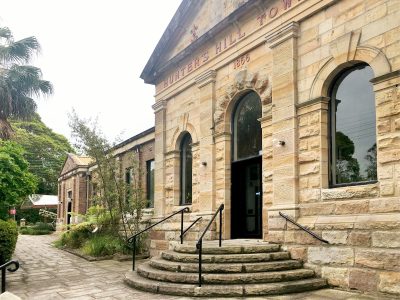 This quote inspired by Ted Mack, Mayor of North Sydney & Parliamentarian who introduced open government policies in the 1980’s is as relevant today as it was then.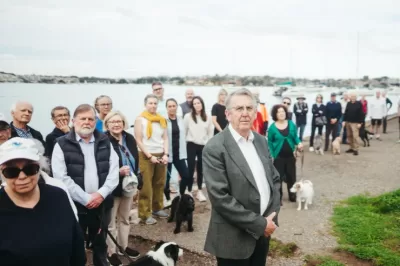
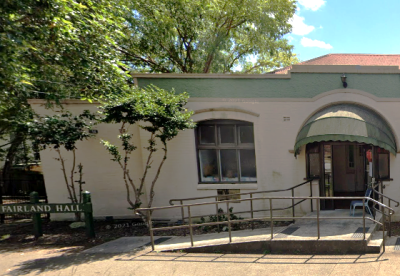 Hunters Hill Council has recently released a Planning Proposal which seeks to re-classify the land at 14 Church Street on which the C.A. Fairland Hall and Playground stand.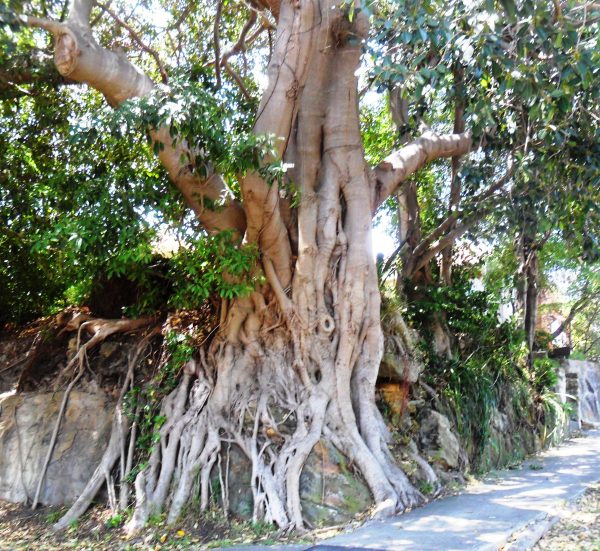
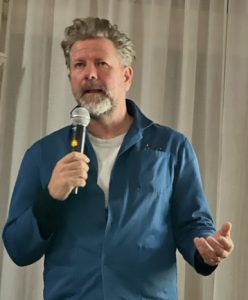 Our AGM and Members’ Evening was held last Thursday 27 June and our speaker, Tim Ross, treated us to a very entertaining presentation and a potted history of his love affair with mid-century modern architecture!
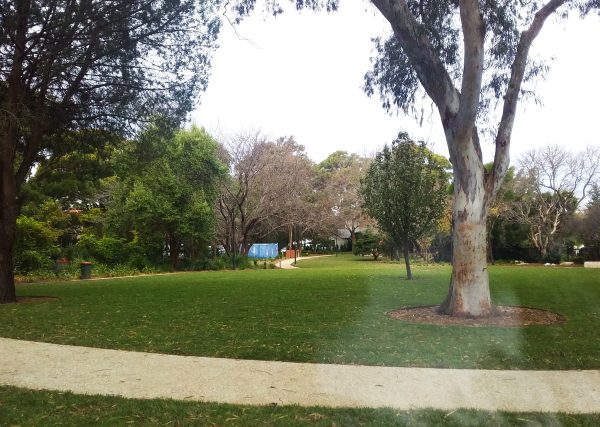 The outcome is a win for all. The trees will now provide some very welcome areas of shade in summer especially necessary in light of the increased paving and expansive concrete at the entry.
 .
.