<?xml version="1.0" encoding="UTF-8"?>
<rss version="2.0"
	xmlns:content="http://purl.org/rss/1.0/modules/content/"
	xmlns:wfw="http://wellformedweb.org/CommentAPI/"
	xmlns:dc="http://purl.org/dc/elements/1.1/"
	xmlns:atom="http://www.w3.org/2005/Atom"
	xmlns:sy="http://purl.org/rss/1.0/modules/syndication/"
	xmlns:slash="http://purl.org/rss/1.0/modules/slash/"
	>

<channel>
	<title>The Hunters Hill Trust</title>
	<atom:link href="http://huntershilltrust.org.au/feed/" rel="self" type="application/rss+xml" />
	<link>http://huntershilltrust.org.au</link>
	<description>Preserving Australia&#039;s oldest garden suburb since 1968</description>
	<lastBuildDate>Wed, 02 Dec 2009 23:03:08 +0000</lastBuildDate>
	
	<language>en</language>
	<sy:updatePeriod>hourly</sy:updatePeriod>
	<sy:updateFrequency>1</sy:updateFrequency>
			<item>
		<title>2009 Christmas party at Wyaldra</title>
		<link>http://huntershilltrust.org.au/2009/12/2009-christmas-party-at-wyaldra/</link>
		<comments>http://huntershilltrust.org.au/2009/12/2009-christmas-party-at-wyaldra/#comments</comments>
		<pubDate>Wed, 02 Dec 2009 22:57:22 +0000</pubDate>
		<dc:creator>HHT</dc:creator>
				<category><![CDATA[General News]]></category>

		<guid isPermaLink="false">http://huntershilltrust.org.au/?p=613</guid>
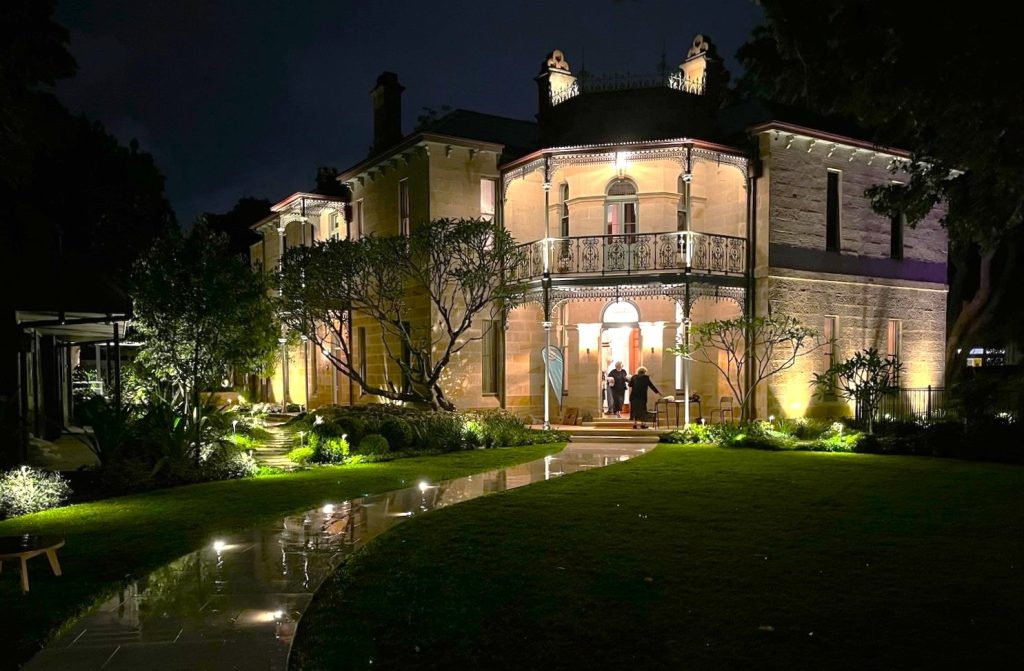
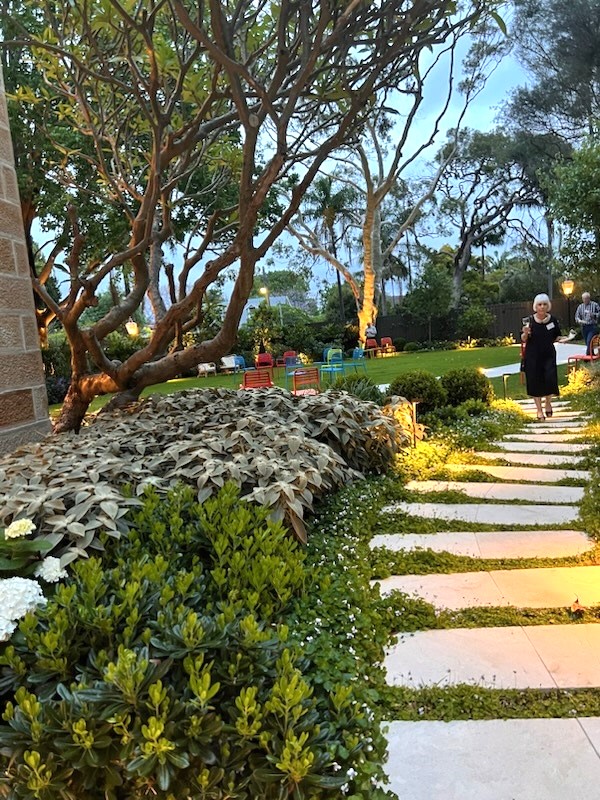
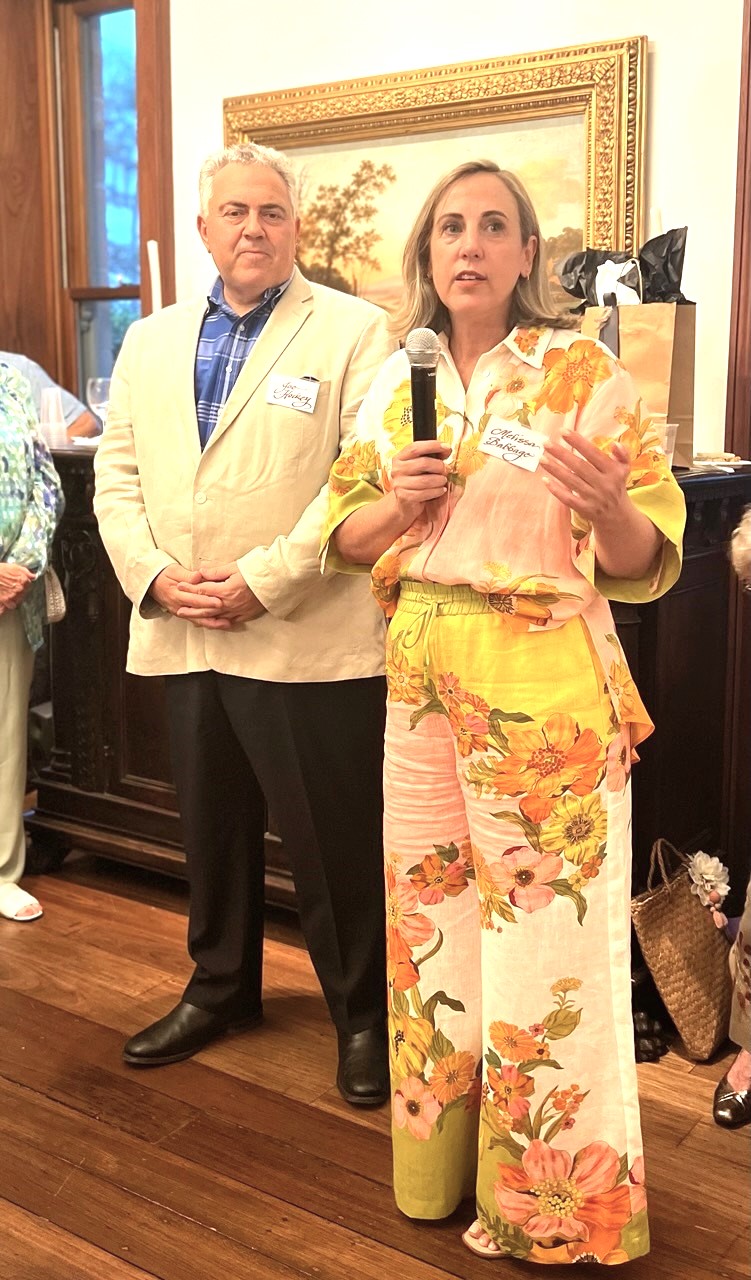
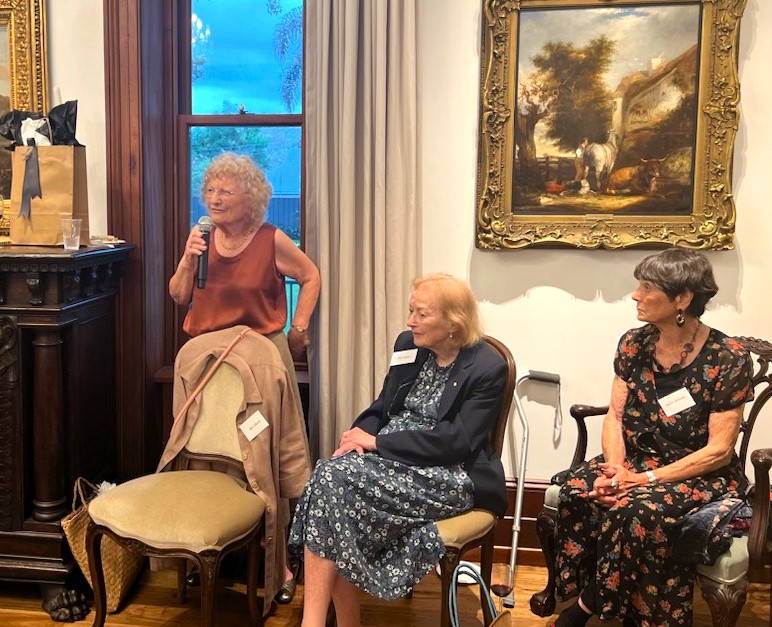
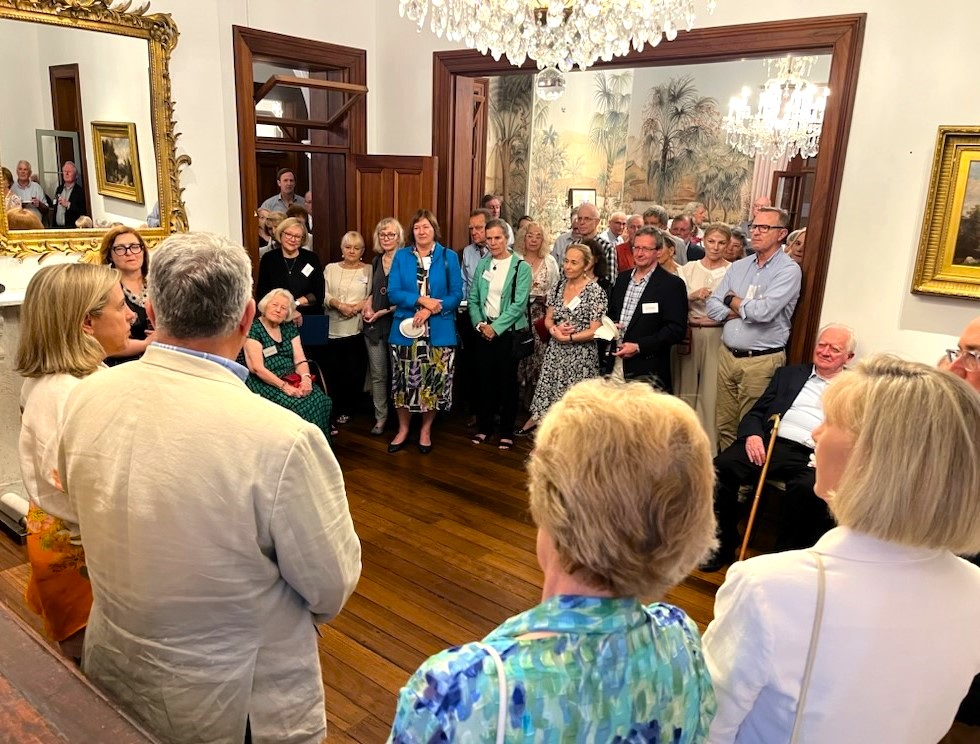
		<description><![CDATA[The Trust&#8217;s 2009 Christmas cocktail party was hosted by Alice and Conrad Oppen at Wyladra on 27th November.  You can see some photos from the event here.
]]></description>
			<content:encoded><![CDATA[<p>The Trust&#8217;s 2009 Christmas cocktail party was hosted by Alice and Conrad Oppen at Wyladra on 27th November.  You can see some photos from the event <a title="Christmas 2009" href="http://huntershilltrust.org.au/album/christmas-party-2009/">here</a>.</p>
]]></content:encoded>
			<wfw:commentRss>http://huntershilltrust.org.au/2009/12/2009-christmas-party-at-wyaldra/feed/</wfw:commentRss>
		<slash:comments>0</slash:comments>
		</item>
		<item>
		<title>Boronia Park reflections: a conversation with Arthur Mashford</title>
		<link>http://huntershilltrust.org.au/2009/11/boronia-park-reflections-a-conversation-with-arthur-mashford/</link>
		<comments>http://huntershilltrust.org.au/2009/11/boronia-park-reflections-a-conversation-with-arthur-mashford/#comments</comments>
		<pubDate>Wed, 18 Nov 2009 00:43:05 +0000</pubDate>
		<dc:creator>Brigid Dowsett</dc:creator>
				<category><![CDATA[General News]]></category>

		<guid isPermaLink="false">http://huntershilltrust.org.au/?p=493</guid>
		<description><![CDATA[In light of the current threat to the integrity of Boronia Park as public open space, as outlined on p.1 of the October edition of the Journal, it was illuminating to have a conversation recently with a long-time resident of Park Road Arthur Mashford, a bright nonagenarian, is currently working on a book on the [...]]]></description>
			<content:encoded><![CDATA[<p>In light of the current threat to the integrity of Boronia Park as public open space, as outlined on p.1 of the October edition of the Journal, it was illuminating to have a conversation recently with a long-time resident of Park Road Arthur Mashford, a bright nonagenarian, is currently working on a book on the history of Boronia Park, on track to be published next year.<span id="more-493"></span></p>
<p>Arthur has lived in the area all his life. He grew up in Ross Street, Gladesville, near the Parramatta River, the son of the first postmaster in the area. His working life was spent at Weil’s Hardware on Victoria Road. As a young man he was given two important pieces of advice: never pay rent, and never owe money. Consequently he saved up one hundred pounds and purchased a building block on a new subdivision on Park Road in 1938.  After getting married Arthur and his bride moved into their new house overlooking the reserve where he still lives with his daughter, Rae.</p>
<p>Arthur was able to throw some interesting light on the reserve and its past incarnations. Boronia Park was originally the eastern extremity of the Field of Mars Common, which stretched as far as what is now Marsfield. From soon after the inception of the colony, this area was used for farming, grazing and wood collecting by the Sydney settlers. It was also the scene of other more nefarious activities, such as sly grog running, being well away from the public gaze. Not illegal but with a severe impact on the native flora was flower harvesting. There are early records of barges laden with Christmas bush and Christmas bells being towed back to Sydney each December. (These species are now quite rare in Boronia Park). Below Tipperary Falls a tannery was located and the fertile flat land was used for vegetable farming. The produce from this and from far afield would be carted down Princes Street to the wharf and loaded onto craft for the trip to the Sydney markets. Princes Street was the most used thoroughfare in the Hunters Hill district in the early 19th century.</p>
<p>Probably in order for the Government to better control the area, Boronia Park was declared a Public Park in 1887 “for the purpose of public recreation, convenience, health, or enjoyment” as specified in the Public Parks act of 1884. Trustees were appointed to oversee its management. ( <em>NSW Government Gaz</em>ette, Friday 16 December, 1887.)</p>
<p>This did not stop the reserve being used for all manner of activities that did not fall within the specified purposes. Council made use of it for storage depots and for garbage and nightsoil disposal. Its nightsoil contractor Don Finlay had a large area in the centre of the park for keeping his horses and equipment, now mistakenly referred as “Murphy’s Paddock”. This area is still so compacted and contaminated that nothing will grow there except stubby grass. The area below the end of High Street was used for nightsoil disposal. Further down was the dunny pan station. Here the empty pans would be rinsed with high pressure steam and then painted with molten pitch. The remains of a steam boiler can still be seen covered with blackberry and other weeds. After the sewer line was put through in 1935 the pans would be tipped directly into it.</p>
<p>For many decades the area adjacent to Ryde Road made a convenient rubbish tip, now converted into the three ovals. Many of the local children, including Arthur’s daughter Rae, kept ponies and rode them in Boronia Park. Horses were still adjisted there as recently as the early 1990’s, and the old horse watering trough still stands at the corner of Park Road and Princes Street.</p>
<p>Arthur can remember the reserve being in a terrible state. It was covered with kunzea scrub and blackberry and criss- crossed with tracks, with very little tree cover (see map below). He dates the start of the park’s improvement from the days when Roy Stuckey took over as Town Clerk, and put a stop to many of the depradations. The Friends of Boronia Park was set up in the 80’s, and has been working continuously ever since, now under the leadership of Rae Mashford. Much of the original bushland has regrown, tracks have been covered over, and lots of the weeds have been eradicated. Wetlands have been installed to control weed infestations and pollution down the drainage lines, and the pond below Tipperary Falls has been dredged.</p>
<p>Princes Street has been closed to public vehicles below the Park Road intersection, and the reserve, apart from the high- usage oval area, has been given over to passive recreation and conservation and is a popular destination for walkers with and without dogs. The Great North Walk traverses the reserve and many people access it by walking down Princes Street to the waterfront. It would seem retrograde to re- open Princes Street and allow high-impact use for a small interest group when the park has come so far. As Arthur pointed out to us it is probably outside the uses prescribed under the Parks act of 1884. However as he said, “there’s always some reason why people want to take over parts of the park”.</p>
<p>Our thanks to Arthur for an entertaining and informative interview, and we are looking forward to seeing his published book and learning a great deal more about Boronia Park.</p>
<div id="attachment_494" class="wp-caption alignnone" style="width: 610px"><img class="size-large wp-image-494" title="boronia_aerial" src="http://huntershilltrust.org.au/wp-content/uploads/2009/11/boronia_aerial-600x389.jpg" alt="An old aerial photograph of Boronia Park with the location of some historic features marked" width="600" height="389" /><p class="wp-caption-text">An old aerial photograph of Boronia Park with the location of some historic features marked</p></div>
]]></content:encoded>
			<wfw:commentRss>http://huntershilltrust.org.au/2009/11/boronia-park-reflections-a-conversation-with-arthur-mashford/feed/</wfw:commentRss>
		<slash:comments>0</slash:comments>
		</item>
		<item>
		<title>Thomas Muir and the naming of Hunter’s Hill</title>
		<link>http://huntershilltrust.org.au/2009/11/thomas-muir-and-the-naming-of-hunter%e2%80%99s-hill/</link>
		<comments>http://huntershilltrust.org.au/2009/11/thomas-muir-and-the-naming-of-hunter%e2%80%99s-hill/#comments</comments>
		<pubDate>Mon, 16 Nov 2009 00:50:03 +0000</pubDate>
		<dc:creator>HHT</dc:creator>
				<category><![CDATA[Journal Articles]]></category>

		<guid isPermaLink="false">http://huntershilltrust.org.au/?p=483</guid>
		<description><![CDATA[by Beverley Sherry
Recently the notion that the Municipality of Hunter’s Hill derived its name from Thomas Muir’s Huntershill has been resurrected, suggested by Don Beresford in an address to the Hunter’s Hill Historical Society.1 Thomas Muir (1765-1799) was one of the five so-called “Scottish Martyrs” transported to New South Wales in 1794 for sedition.2 He [...]]]></description>
			<content:encoded><![CDATA[<div id="attachment_484" class="wp-caption alignnone" style="width: 318px"><img class="size-full wp-image-484" title="hunter" src="http://huntershilltrust.org.au/wp-content/uploads/2009/11/hunter.JPG" alt="Left to Right: Captain John Hunter, second governor of NSW. Thomas Muir, Scottish activist and convict." width="308" height="192" /><p class="wp-caption-text">Left to Right: Captain John Hunter, second governor of NSW. Thomas Muir, Scottish activist and convict.</p></div>
<p><em>by Beverley Sherry</em></p>
<p>Recently the notion that the Municipality of Hunter’s Hill derived its name from Thomas Muir’s <em>Huntershill</em> has been resurrected, suggested by Don Beresford in an address to the Hunter’s Hill Historical Society.<sup>1</sup> Thomas Muir (1765-1799) was one of the five so-called “Scottish Martyrs” transported to New South Wales in 1794 for sedition.<sup>2</sup><span id="more-483"></span> He and his fellow prisoners brought money with them and were not treated as felons.  Two convict servants were assigned to Muir and he was able to purchase land. In a letter to a friend in London of 13 December 1794, he describes his situation in Sydney, and this description, followed by the complete concluding text of the letter, was published in the London <em>Morning Chronicle</em> of 29 July 1795.<sup>3</sup> Muir writes: “I have a neat little house here [in Sydney town], and another two miles distant, at a farm across the water, which I purchased.” He does not name the farm, but Peter Mackenzie, in his 1831 biography of Muir states, without documentary support, that he called it <em>Huntershill</em> after his home in Scotland. <sup>4</sup> This has been repeated. In a 1926 essay, Maybanke Anderson quotes Muir’s letter (inaccurately); a fact not noted before is that she adds a sentence of her own: “This house I have called after my father’s house in Glasgow, ‘<em>Huntershill</em>’.”<sup>5</sup> This too has been repeated.</p>
<p>The precise location of “two miles distant,&#8230; across the water” has been disputed. An early researcher suggested Milsons Point, but no records exist for the purchase of a farm there by Thomas Muir. <sup>6</sup> The individual researches of James Jervis and James Scott, both in 1960, cast doubt on this location. Scott quotes a letter from one of the other Scottish Martyrs, the Rev. Thomas Fysshe Palmer, of 15 September 1795, which refers to the dwellings of Muir, William Skirving (another Martyr), and himself: “our houses at Sydney are contiguous, as also our farms in the country”, and Palmer’s farm was accessed via Rozelle Bay.<sup>7</sup></p>
<p>There is some doubt, then, over the location of Muir’s farm house. More importantly for the present enquiry, and whether Muir called his farm <em>Huntershill </em>or not, the name Hunter’s Hill (as two words) was used in government documents before Muir arrived in Sydney. As early as 3 October 1794, three government grants were issued in “the district of Hunter’s Hill”, whereas Muir arrived on the transport <em>Surprize</em> on 25 October 1794, coming ashore with the other Scottish Martyrs in November.<sup>8</sup> So, when Muir arrived, the name Hunter’s Hill was already in use, and designated the high ground on the north shore, around Gore Hill.</p>
<p>These historical facts were pointed out by James Jervis in 1945 and again in 1960.<sup>9</sup> Don Beresford takes no account of them, or of the most recent histories of Hunter’s Hill. The claim for Muir’s <em>Huntershill </em>has been repeatedly rejected: by Isadore Brodsky, in <em>Hunter’s Hill, New South Wales 1861-1961</em>(1961); by R. Hamilton in Hunter’s <em>Hill Pre- 1835</em> (1970); by the Hunter’s Hill Trust in all four editions of their <em>Heritage of Hunter’s Hill</em> (1969,1977, 1982, 2002); by P.R. Stephenson and Brian Kennedy in <em>The History and Description of Sydney Harbour</em> (1978); by Meredith Walker &amp; Associates in the <em>Hunter’s Hill Heritage Study</em> (1984); and by myself in Hunter’s <em>Hill: Australia’s Oldest Garden Suburb</em> (1989).</p>
<p>Brodsky devotes a subsection of his book to “The Myth of Thomas Muir.” <sup>10</sup> Stephensen deals with the question at greater length, and concludes: “There has been no need to seek such an odd and unconvincing explanation of the name Hunter’s Hill, which was in official and popular use, as a well-deserved compliment to Captain John Hunter, of H.M.S. Sirius, before Thomas Muir was ever heard of at Sydney.”<sup>11</sup> I will consider the case for Hunter shortly, but the faulty history about Muir was given impetus by Maybanke Anderson’s essay of 1926. She was evidently ignorant of the land grants in “the district of Hunter’s Hill” of 3 October 1794, before Muir’s arrival. Lacking this knowledge and calculating that Muir had a farm at Milsons Point called <em>Huntershill</em>, she deduced that the suburb of Hunter’s Hill derived its name from Muir.</p>
<p>Dates alone preclude this derivation. Moreover, any name for Muir’s farm was hardly public knowledge. No mention of it appears in the lengthy collection of contemporary documents on “The Scotch Martyrs” preserved in the <em>Historical Records of New South Wales</em>. <sup>12</sup> Nor do Lieutenant- Governor Grose, Governor Hunter, or Judge-Advocate David Collins, in their reports on Muir, refer to a <em>Huntershill</em>. In his <em>Account of the English Colony in New South Wales</em> (1798), Collins records that Muir “chiefly passed his time in literary ease and retirement, living out of the town at a little spot of ground which he had purchased for the purpose of seclusion.” <sup>13</sup></p>
<p>Prompted by Don Beresford’s address to the Hunter’s Hill Historical Society, a suggestion has been made to erect a commemorative plaque to Thomas Muir in Hunter’s Hill; readers in Scotland who have accessed Beresford’s paper on the internet have also expressed enthusiasm. <sup>14</sup> Does Muir deserve this? First, historical facts prove that the name Hunter’s Hill predates his arrival. Second, there are no moral or civic grounds to warrant a memorial for him. What did Muir do for Australia? Despite his privileged life style, he absconded as soon as an opportunity arose. Sixteen months after his arrival, he escaped on 18 February 1796 by the American ship, <em>The Otter</em>, as recorded by Collins and the shipping records. <sup>15</sup></p>
<p>This is not to deny Muir’s eminence as a champion of human rights in the era of the French revolution. He was a radical ahead of his time, and is deservedly commemorated at the village of Huntershill near Glasgow and in the imposing monuments to the Scottish Martyrs in Edinburgh and London.  As the Scottish historian Michael Donnelly shows in his biography of Muir, he was “a man of principle” in his practice as a lawyer, “prepared to take on the most unrewarding and difficult cases and even occasionally foregoing a fee when petitioned by a destitute client”; and his trial in Glasgow in 1793 was “a classic example of the political abuse of the judicial process.” <sup>16</sup> Donnelly records Muir’s transportation and his “uneventful” term of confinement in Sydney:</p>
<blockquote><p>Unlike his companions, or indeed his father, Muir had little or no taste for farming and with an eye to ultimate escape from the settlement, he purchased a small hut and several acres of land on the opposite side of the bay. by this means he was able to remove himself from the direct observation of the Governor and his soldiers and at the same time was provided with a legitimate excuse for keeping a small boat. (Donnelly, pp. 17-18).</p></blockquote>
<p>It was by means of this boat that he and his two convict servants managed to row out through Sydney Heads on the night of 17 February 1796 and were picked up the next day, at a predetermined site offshore, by <em>The Otter</em>. After tremendous hardship, Muir reached France, where he died in 1799, far too young at the age of thirty-three.</p>
<p>In his work in Scotland, Ireland, and France, Muir was a hero of the dispossessed and the downtrodden, but there is no evidence that he identified with or provided inspiration for the shackled convicts of Port Jackson or that he aired his ideas on liberty. In fact, upon their arrival, Lieutenant- Governor Grose ordered the Scottish Martyrs “to avoid on all occasions a recital of those politicks” which had reduced them to their present “unfortunate situation.” <sup>17</sup> So Muir lived, as Collins notes, away from the public eye. He and his fellow Martyrs were “gentlemen of leisure”, “pampered prisoners” (Stephensen, p. 258); as the historian Christina Bewley writes, they “were separated by education and background from almost the entire community.” <sup>18</sup></p>
<p>The question remains, where did the name Hunter’s Hill come from? It is unlikely that it was named for hunting in “the district of Hunter’s Hill”, where farming was carried on. The most likely origin is another Scot, Captain John Hunter, later Governor Hunter. This is now the general consensus, and what follows is based on my history of Hunter’s Hill. <sup>19</sup></p>
<p>In contrast to Muir, Hunter did a great deal for Australia. As Beresford acknowledges, one of his enduring legacies is as an artist and naturalist, a shining example of his work being <em>The Hunter Sketchbook</em>. From the first days of the settlement, Hunter contributed to the making of the colony. On 28 January 1788, two days after the First Fleet arrived at Sydney Cove, he set off in a six-oared boat to survey the harbour, an undertaking which took several months, was meticulously done, and involved not only continual depth soundings but careful observation of the Aborigines; the latter is invaluable information recorded in Hunter’s <em>Journal</em> (1793). Parts of the harbour were named after Hunter’s officers and are so indicated on his chart – Bradley’s Head for Lieutenant Bradley, Ball’s Head for Lieutenant Ball; Hunter Bay is also marked, although this later became known as Balmoral Beach.</p>
<p><img class="alignnone size-large wp-image-488" title="hh_map" src="http://huntershilltrust.org.au/wp-content/uploads/2009/11/hh_map-600x464.jpg" alt="hh_map" width="600" height="464" /></p>
<p>[Detail, Deputy Surveyor General’s <em>Plan of the Settlements in New South Wales</em> (1796). “<em>Hunters Hill</em>” then designated land north-east of Lane Cove. Thirty-three farms are marked, numbered 14 to 46. In the complete plan, their acreage (25 to 30 acres) and owners’ names are listed. Thomas Muir is not named anywhere on the plan nor does his supposed farm at Milsons Point, <em>Huntershill</em>, appear. Reproduced from <em>Historical Records of New South Wales</em>, vol. 3, fold-out following title page.]</p>
<p>The name Hunter’s Hill, however, went into permanent usage. The high ground which was known as “the district of Hunter’s Hill” before Thomas Muir arrived in Australia is clearly marked on Hunter’s map of the New South Wales settlements preserved in the Mitchell Library. <sup>20</sup> “Hunters Hill” is written in Hunter’s small, neat handwriting on the area of today’s Gore Hill, “Mount Hunter” in the area of Camden. When the County of Cumberland was divided into parishes in the 1830s, the name Hunter’s Hill shifted to designate the land between the Lane Cove and Parramatta Rivers and as far west as Ryde. When the Municipality of Hunter’s Hill was formed in 1861, the name moved eastwards, to define the municipality.</p>
<p>Hunter was less than successful in the difficult job of Governor of the colony (1795-1800), but he achieved much as a navigator, cartographer, and explorer, whether sounding the depths of the harbour, recording his observations about the Aborigines, tramping through bush and wading through swamps from Pittwater to Middle Harbour, or bringing back provisions from the Cape of Good Hope in 1789 to the starving colony. In 1788, he and his assistants, in that six-oared boat, were the first Europeans to lay eyes on the area now known as Hunter’s Hill, and his chart shows thirty depth soundings around the peninsula. <sup>21</sup></p>
<p>The Municipality of Hunter’s Hill did not derive its name from Thomas Muir; of that there is strong historical evidence. While there is no absolute evidence that it was named for Captain Hunter, the name did not come out of thin air, and Hunter is manifestly the most likely origin.</p>
<p><strong>Dr Beverley Sherry</strong> is an Honorary Associate of the University of Sydney and author of <em>Hunter’s Hill: Australia’s Oldest Garden Suburb</em>, a history commissioned by the Hunter’s Hill Council for Australia’s bicentenary.</p>
<p><strong>Notes</strong></p>
<p><em>JRAHS: Journal of the Royal Australian Historical Society </em></p>
<p><em>HRNSW: Historical Records of New South Wales</em></p>
<p>1.  Don Beresford, “Was it Thomas Muir or John Hunter?” <em>Bunk</em> (Journal of the Hunter’s Hill Historical Society), vol.8, Issue 1 (February, 2008), pp. 2-5; this paper is a transcript of Beresford’s address to the Society on 3 December 2007.</p>
<p>2.  On Muir’s life, see John Earnshaw, <em>Thomas Muir Scottish Martyr. Studies in Australian and Pacific History</em> No. 1 (Cremorne, NSW, 1959) and Earnshaw’s entry on Muir in the <em>Australian Dictionary of Biography</em> online; H.T. Dickinson’s entry on Thomas Muir in the <em>Oxford Dictionary of National Biography</em> online; Michael Donnelly, <em>Thomas Muir of Huntershill</em> (Bishopbriggs, Scotland, 1975) and Donnelly’s entry on Thomas Muir in <em>Biographical Dictionary of Modern British Radicals</em>, ed. Joseph A. Bayllen and Norbert A. Gossman (Hassocks, Sussex, 1979), vol. 1, pp. 330-34; Christina Bewley, <em>Muir of Huntershill</em> (Oxford, 1981); and Jonathan Wantrup, The transportation, exile and escape of Thomas Muir (Melbourne, 1990), a translation, with Notes and Introduction, of <em>Histoire de la Tyrannie du Gouvernement Anglais, exercee envers le celebre Thomas Muir, Ecossais</em> (Paris, 1798).</p>
<p>3.  Extracts of the letter were reprinted in <em>HRNSW</em>, vol. 2, p. 870. I am indebted to the University of Sydney Library for obtaining a copy of the <em>Morning Chronicle</em> letter of 29 July 1795.</p>
<p>4.  Peter Mackenzie, <em>The Life of Thomas Muir</em> (Glasgow, 1831), p.33. Mackenzie’s biography has numerous mistakes and is generally regarded now as unreliable.</p>
<p>5.  Maybanke Anderson, “The Story of Hunter’s Hill”, <em>JRAHS</em> 12 (1926): 142. This essay totally lacks references.</p>
<p>6.  J.H. Watson, “Notes on Some Suburbs of Sydney”, <em>JRAHS</em> 13, Part 1 (1927): 25-27.</p>
<p>7.  James Scott, “The Scottish Martyrs’ Farms,” <em>JRAHS</em> 46, Part 3 (1960): 166.</p>
<p>8.  J.S.Cumpton, <em>Shipping Arrivals and Departures Sydney 1788-1825 Parts I, II and II</em> (Canberra, ACT, 1964), p. 29, where Muir is listed among the passengers; David Collins, <em>An Account of the English Colony in New South Wales</em> (London, 1798; repr. Adelaide, 1971), pp. 395, 399.</p>
<p>9.  James Jervis, “The Origin of the Names in Port Jackson”, <em>JRAHS</em> 31 (1945), 397 and “Settlement in the Parish of Hunter’s Hill”, <em>JRAHS</em> 46, Part 4 (1960), 187-88.</p>
<p>10.  Isadore Brodsky, <em>Hunter’s Hill 1861-1961</em> (Sydney, 1961), pp. 9-11.</p>
<p>11.  P.R. Stephensen and Brian Kennedy, <em>The History and Description of Sydney Harbour</em> (2nd ed., Sydney, 1980), p. 258; for the full account of the question, see pp. 255-59.</p>
<p>12.  <em>HRNSW</em>, vol. 2, Appendix F pp. 821-86.</p>
<p>13.  Collins, <em>An Account of the English Colony in New South Wales</em>, p. 457.</p>
<p>14.  <em>Bunk</em>, vol. 9, Issue 2 (April 2009), p. 1 and vol. 9, Issue 3 (June 2009), pp. 1, 3.</p>
<p>15.  Collins, <em>An Account of the English Colony in New South Wales</em>, p. 457; Cumpton, <em>Shipping Arrivals and Departures</em>, p. 31.</p>
<p>16.  Donnelly, <em>Thomas Mu</em>ir, pp. 7, 13.</p>
<p>17.  Letter from Grose to the Rev. T.F. Palmer, 26 October 1794, <em>HRNSW</em>, vol. 2, p. 868.</p>
<p>18.  Bewley, <em>Muir of Huntershill</em>, p. 122.</p>
<p>19.  Beverley Sherry, <em>Hunter’s Hill: Australia’s Oldest Garden Suburb</em> (Balmain, NSW, 1989), pp. 18-25.</p>
<p>20. [New South Wales sketch of the settlements 20th August 1796] [cartographic material] / [by Governor Hunter].</p>
<p>21.  George Raper, <em>Chart of Port Jackson . . . Survey’d by Capt.n Iohn Hunter. . . 1788</em> [Mitchell Library]</p>
]]></content:encoded>
			<wfw:commentRss>http://huntershilltrust.org.au/2009/11/thomas-muir-and-the-naming-of-hunter%e2%80%99s-hill/feed/</wfw:commentRss>
		<slash:comments>0</slash:comments>
		</item>
		<item>
		<title>Proposed rugby club facility at Boronia Park</title>
		<link>http://huntershilltrust.org.au/2009/11/proposed-rugby-club-facility-at-boronia-park/</link>
		<comments>http://huntershilltrust.org.au/2009/11/proposed-rugby-club-facility-at-boronia-park/#comments</comments>
		<pubDate>Sun, 15 Nov 2009 00:04:13 +0000</pubDate>
		<dc:creator>Tony Coote</dc:creator>
				<category><![CDATA[General News]]></category>

		<guid isPermaLink="false">http://huntershilltrust.org.au/?p=440</guid>
		<description><![CDATA[The Trust has recently become aware of The Hunters Hill Rugby Club’s proposal for a facility to be constructed in Princes Street on the bank of No 2 oval at Boronia Park. 
David Innes, Group Manager Works and Services at Council says that “The whole proposal is still in its preliminary stages and we have suggested [...]]]></description>
			<content:encoded><![CDATA[<p><img class="alignright size-medium wp-image-453" title="RUGBY CLUB BORONIA PK PLANS" src="http://huntershilltrust.org.au/wp-content/uploads/2009/11/RUGBY-CLUB-BORONIA-PK-PLANS1-203x300.jpg" alt="RUGBY CLUB BORONIA PK PLANS" width="203" height="300" />The Trust has recently become aware of The Hunters Hill Rugby Club’s proposal for a facility to be constructed in Princes Street on the bank of No 2 oval at Boronia Park. </p>
<p>David Innes, Group Manager Works and Services at Council says that “The whole proposal is still in its preliminary stages and we have suggested to the proponents that they need to identify and understand community attitudes and support, before lodging any applications”.</p>
<p><em>The Trust appreciates the club’s need to have a place of its own to keep gear and gym equipment and where members and friends can go after the game to have a drink, a bite to eat and to socialise etc.    However t</em><em>here is a level of concern in the community about the location of the building which may be due to a lack of information.  So in the interests of getting some clarity, we have written to the club with a number of questions about the plans displayed at the September 13th meeting: <span id="more-440"></span></em></p>
<p><strong><em>SOME RESERVATIONS REGARDING THE PLANS DISPLAYED AT THE 13 SEPTEMBER MEETING</em></strong></p>
<ul>
<li><em> </em><em>Is the proposal intended to be licensed premises for eating and drinking?</em></li>
<li><em> </em><em>Can the proposal be financed and maintained without a commercial income stream generated by operating a licensed facility?</em></li>
<li><em> </em><em>How has the site location been determined and were any alternatives considered? </em></li>
<li><em>Has an environmental impact assessment been made of the site prior to determining how such a facility would impact on the current usage of the park, and on the health of the Sydney Turpentine Ironbark Forest along Princes Street and the riparian bushland communities below Princes Street?</em></li>
<li><em>Has Council&#8217;s own Bushland Management officer been consulted, considering the substantial amounts of money, both from Capital Works and government grants that have been spent over previous years and ongoing, on stream remediation projects and protecting the remnant STIF?</em></li>
<li><em>What are the views of Boronia Park Bushcare and related voluntary  organisations who have been maintaining  the  bushland  adjacent  to the proposed site for many years.</em></li>
<li><em>Has The Rugby Club canvassed the economic viability of such a proposal in the light of its proximity of the HH Hotel, The Gladesville RSL,The Gladesville Sporties (a few hundred metres up Ryde Road) and The Hunters Hill Club which is also not very far away?</em></li>
<li><em>Has the impact of the proposal on the patronage of these existing club and hotel facilities been assessed? </em></li>
<li><em>Has a heritage report been prepared in relation to its impact on Boronia Park, which is a schedule 6 item in the LEP?</em></li>
<li><em> </em><em>What will be the impact of all the additional vehicle traffic coming into the park?</em></li>
<li><em> </em><em>Vehicular access to the area is currently restricted. How will the opening of the facility change this?</em></li>
<li><em> </em><em>What will the proposal look like from Princes Street onto which the scheme seems to turn its back?</em></li>
<li><em> </em><em>When will the facility be used and during what hours of the day?</em></li>
<li><em> </em><em>Will there be any additional street lighting in association with the proposal?</em><em></em></li>
</ul>
<p><strong><em>BACKGROUND</em></strong></p>
<p><em>The Plan of Management for Boronia Park allows for the construction of a Community Facility in the general area proposed.  Such a term implies a building for the use of any community group operating within the Boronia Park/Hunters Hill community.  </em></p>
<p><em> </em><em>Being remote from the existing grandstand and associated facilities, such a Community Facility would need to be supplied with water, power  and sewage, making it an expensive project.  Such a Community Facility could well include storage and changing facilities for sports played in Boronia Park, but not for the exclusive use of any particular sport or sports.  </em></p>
<p><em> </em><em>The proposed building, as described at the meeting on 13<sup>th</sup> September, appears to be intended primarily to provide facilities for the Rugby Club, plus dining and drinking facilities (with a potential to be licensed).  Meeting the requirements for licensed premises would greatly increase the cost of construction and maintenance, and therefore decrease its availability to other community groups.</em></p>
<ul>
<li><em> </em><em>The site of the building is on a steep slope at the eastern end of oval No 2</em></li>
<li><em>There is a dotted line, which suggests a large parking area over and above the small existing carpark beside oval 3.</em></li>
<li><em>The cost of the building and associated furniture etc is estimated to be around $4 million, plus the cost of deep pile footings, which will be required because of the nature of the site.</em></li>
<li><em>69% of the building is given over to eating and drinking and the rest consists of an underground gymnasium and briefing room, rugby store, grounds equipment store and changing rooms for visitors and home teams on the lower level.</em></li>
</ul>
<p><em> </em>The Trust is waiting on a response from the Club and we will keep members informed of any further developments.</p>
]]></content:encoded>
			<wfw:commentRss>http://huntershilltrust.org.au/2009/11/proposed-rugby-club-facility-at-boronia-park/feed/</wfw:commentRss>
		<slash:comments>0</slash:comments>
		</item>
		<item>
		<title>Alterations to Hunters Hill Public School</title>
		<link>http://huntershilltrust.org.au/2009/11/alterations-to-hunters-hill-public-school/</link>
		<comments>http://huntershilltrust.org.au/2009/11/alterations-to-hunters-hill-public-school/#comments</comments>
		<pubDate>Fri, 13 Nov 2009 05:12:48 +0000</pubDate>
		<dc:creator>Tony Coote</dc:creator>
				<category><![CDATA[General News]]></category>

		<guid isPermaLink="false">http://huntershilltrust.org.au/?p=402</guid>
		<description><![CDATA[
New 2 storey classroom and toilet block at Hunters Hill Public School
 Hunters Hill Public School has plans for a new 2-storey classroom block at the school.  It is to be designed and built by Bovis Lend Lease under the Federal Government’s economic stimulus plan – “Nation Building”. 
Under this plan there is no requirement for the builder [...]]]></description>
			<content:encoded><![CDATA[<p><img class="alignright size-medium wp-image-403" title="Hunters Hill Public School" src="http://huntershilltrust.org.au/wp-content/uploads/2009/11/Hunters_Hill_Public_School-300x225.jpg" alt="Hunters Hill Public School" width="300" height="225" /></p>
<p><strong>New 2 storey classroom and toilet block at Hunters Hill Public School</strong></p>
<p> Hunters Hill Public School has plans for a new 2-storey classroom block at the school.  It is to be designed and built by Bovis Lend Lease under the Federal Government’s economic stimulus plan – “Nation Building”. </p>
<p>Under this plan there is <span style="text-decoration: underline;">no requirement for the builder to submit a Development Application to Council</span>. </p>
<p>Hunters Hill Trust has expressed a number of concerns:<span id="more-402"></span></p>
<ul>
<li> It is a great pity that a site-specific design was not commissioned for this location, which is in the heart of Hunters Hill Conservation Area No 1 and has a number of heritage items in close proximity.   An opportunity for a building of excellence has been lost.</li>
<li> Tanner Architects&#8217; heritage impact statement is incomplete in that it does not assess the impact of the new building on adjacent heritage items and did not make any analysis of its impact on the conservation area.</li>
<li> The proposed building is large in scale compared to existing buildings on the site that are adjacent to it and compared to the existing buildings that are to be demolished.</li>
<li> Proposed materials are not sympathetic to the heritage buildings adjacent or the general locale</li>
<li> Because of the demolition of two existing single storey buildings the new building will be very apparent from Stanley Street and will have a major impact on the appearance of the site from that direction</li>
<li> An existing unsightly demountable building is not necessarily go to be demolished</li>
<li> The Conservation Advisory Panel made number of suggestions as to how to reduce the impact of the proposed building including:
<ul>
<li>make the roof form hipped rather than gabled, which would reduce its bulk when seen from Alexandra Street</li>
</ul>
<ul>
<li>introduce some windows into the Alexandra Street elevation to relieve its stark quality.</li>
<li>Increase the distance of the building from the side boundary to allow for more landscaping and trees to separate it from the adjacent heritage item.</li>
<li> A colour scheme was not seen, but dark recessive colours would help lessen the impact of the building.</li>
</ul>
</li>
</ul>
<p>The Trust has made submissions to the school, the builders and both State and Federal Government arguing that a Development Application should be submitted to Council so that a proper assessment of its impact can be made.    Here is some of what we wrote to Judy Goodsell, the Principal of the school:</p>
<p>Hunters Hill Public School is located in one of the most historically important precincts in Hunters Hill.  It also has two Schedule 6 Heritage Items within its grounds and these are displayed on the masthead of the home page of its website.  Clearly the school has an interest and pride in its own architectural heritage.</p>
<p> The school is also within Hunters Hill Council’s Conservation Area No 1 and there are a number of other Schedule 6 heritage items in the near vicinity.  Under Clause 19 of Local Environment Plan No 1, for any proposal within the Conservation Area or in the vicinity of an item of environmental heritage, Hunters Hill Council is required to assess its impact on both the Conservation Area itself and the heritage items nearby.  This is the process that was followed when the school most recently applied for approval to build additional facilities.</p>
<p> The Hunters Hill Trust fought to have these heritage protection clauses included in the LEP.  Over the last 4 decades we have continuously campaigned to maintain the unique character of Hunters Hill through the conservation of its heritage.  We work both as a lobby group representing our 300 members and through our representation on a number of Council committees including the Conservation Advisory Panel, which advises Council on matters to do with conservation.</p>
<p> We urge the school to insist that Bovis Lend Lease does submit a Development Application to Council so that a proper assessment of the proposal can be made.  This is something that would only be expected from such a long-standing and respected institution in the Municipality.  It would also set an example to its junior citizens that the school is as interested in heritage conservation as its website masthead would suggest. </p>
<p>There was an informal meeting on site, which was attended by representatives of the builder, the school, the immediate neighbour and Council, but to date no formal DA has been lodged with Council.  On Wednesday 11 November, Council’s Conservation Advisory Panel had a look at the A4 notification drawings and made a number of comments, which the Council will no doubt forward to the builder and the school.</p>
]]></content:encoded>
			<wfw:commentRss>http://huntershilltrust.org.au/2009/11/alterations-to-hunters-hill-public-school/feed/</wfw:commentRss>
		<slash:comments>0</slash:comments>
		</item>
		<item>
		<title>Threat to riverfront parkland</title>
		<link>http://huntershilltrust.org.au/2009/09/threat-to-riverfront-parkland/</link>
		<comments>http://huntershilltrust.org.au/2009/09/threat-to-riverfront-parkland/#comments</comments>
		<pubDate>Sat, 19 Sep 2009 09:28:01 +0000</pubDate>
		<dc:creator>HHT</dc:creator>
				<category><![CDATA[Battles]]></category>
		<category><![CDATA[General News]]></category>

		<guid isPermaLink="false">http://huntershilltrust.org.au/?p=56</guid>
		<description><![CDATA[UPDATE:  Sydney Uni has requested and been granted a deferral of the the assessment of their development application. 
Sydney University proposes to build a huge boatshed and pontoon on public riverfront at Cunningham’s Reach, Linley Point 
Under the current proposal, 60% of the useable area of the park would be alienated. All that would remain of [...]]]></description>
			<content:encoded><![CDATA[<p><span style="color: #ff0000;">UPDATE:  Sydney Uni has requested and been granted a deferral of the the assessment of their development application. </span></p>
<p><strong>Sydney University proposes to build a huge boatshed and pontoon on public riverfront at Cunningham’s Reach, Linley Point</strong><strong> </strong></p>
<div id="attachment_57" class="wp-caption alignnone" style="width: 610px"><img class="size-full wp-image-57 " title="cunningham1" src="http://huntershilltrust.org.au/wp-content/uploads/2009/09/Untitled1.jpg" alt="As it is now:  the Lane Cove River at Cunningham’s Reach, west of the Figtree Bridge " width="600" height="350" /><p class="wp-caption-text">As it is now: the Lane Cove River at Cunningham’s Reach, west of the Figtree Bridge </p></div>
<p>Under the current proposal, 60% of<strong> </strong>the useable area of the park would be alienated. All that would remain of the park is an area less than one third of the size of a football pitch.<br />
<span id="more-56"></span></p>
<div id="attachment_58" class="wp-caption alignnone" style="width: 362px"><img class="size-full wp-image-58" title="cunningham2" src="http://huntershilltrust.org.au/wp-content/uploads/2009/09/Untitled2.jpg" alt="This montage of Cunningham’s Reach shows the impact of Sydney University’s proposal." width="352" height="287" /><p class="wp-caption-text">This montage of Cunningham’s Reach shows the impact of Sydney University’s proposal.</p></div>
<p>The Hunters Hill Trust is opposed to this proposal, particularly because</p>
<ul>
<li>it alienates public lands</li>
<li>destroys a large part of a small public park</li>
<li>has an adverse impact on a very beautiful part of the Lane Cove River.</li>
</ul>
<p>The proposal is on RTA land, which is within Lane Cove and Lane Cove Council is the consent authority. However it has regional significance.</p>
<p>People from all over Sydney use the park, fish in the river, row or boat along it or walk the bush tracks in Boronia Park including part of The Great North Walk, which has even wider significance.</p>
<p>All those who value this wonderful and free public amenity will be appalled by the idea of handing over a great chunk of it to a very small and privileged elite. And all those who love the tranquil bushland character of this part of the river will want to fight to preserve it from the impact of a large and inappropriate development.</p>
<p>The proposal came before Lane Cove Council on Monday August 3 and over 100 people attended the meeting. The university requested a deferral of consideration of the application until Monday September 7, which was granted. So this gives all those opposed to the scheme a window of opportunity to let both the University and Council know what you think.</p>
<p>You can also click on <a href="http://saveourpark.org.au">http://saveourpark.org.au</a> to get a very good idea of what is being proposed and its impact.</p>
<div id="attachment_60" class="wp-caption alignnone" style="width: 365px"><img class="size-full wp-image-60" title="impact" src="http://huntershilltrust.org.au/wp-content/uploads/2009/09/impact.jpg" alt="Visual impact of the proposal" width="355" height="275" /><p class="wp-caption-text">Visual impact of the proposal</p></div>
<p><img class="alignnone size-full wp-image-61" title="Cunningham's reach scale" src="http://huntershilltrust.org.au/wp-content/uploads/2009/09/Cunninghams-reach-scale.jpg" alt="Cunningham's reach scale" width="460" height="639" /></p>
<p>Over the last 40 years The Hunters Hill Trust has been involved in successful battles to preserve public lands for public use. These include saving Kelly’s Bush and The Sydney Harbour Defence Lands.</p>
<p>Significantly, The Trust was involved in the successful campaign to save that part of Boronia Park immediately opposite Cunningham’s Reach from being turned into an extension of the Lane Cove expressway back in the 1970s.</p>
<p>Today, Trust members can make a significant contribution to this campaign by writing to or emailing Lane Cove Council and the University.</p>
<p>I urge you to do so and, if you happen to be an alumnus of Sydney University, to mention that fact. You may also wish to write to the local state member, Anthony Roberts and the Federal Member Joe Hockey.</p>
<h2>Contacts</h2>
<h3><strong>Lane Cove Council</strong></h3>
<p><span style="text-decoration: underline;">Mayor</span> Councillor Ian Longbottom (West Ward)<br />
Ph 9428 3992</p>
<p>Email: <span style="text-decoration: underline;"><a href="mailto:ilongbottom@lanecove.nsw.gov.au">ilongbottom@lanecove.nsw.gov.au</a></span></p>
<p><strong>Councillors</strong></p>
<p>Councillor Scott Bennison (Central Ward)<br />
Ph:   0402 406 241  </p>
<p>Email: <span style="text-decoration: underline;"><a href="mailto:sbennison@lanecove.nsw.gov.au">sbennison@lanecove.nsw.gov.au</a><span style="-webkit-text-decorations-in-effect: none;"> </span></span></p>
<p>Councillor Shauna Forrest (Central Ward)<br />
Ph:   0410 041 279  <br />
Email: <span style="text-decoration: underline;"><a href="mailto:sforrest@lanecove.nsw.gov.au">sforrest@lanecove.nsw.gov.au</a><span style="-webkit-text-decorations-in-effect: none;"> </span></span></p>
<p>Councillor Ann Smith (Deputy Mayor, Central Ward)</p>
<p>Ph: 9428 4874<br />
Email: <span style="text-decoration: underline;"><a href="mailto:asmith@lanecove.nsw.gov.au">asmith@lanecove.nsw.gov.au</a></span></p>
<p>Councillor David Brooks-Horn (East Ward)<br />
Ph: 0450 288 072</p>
<p>Email: <span style="text-decoration: underline;"><a href="mailto:dbrookshorn@lanecove.nsw.gov.au">dbrookshorn@lanecove.nsw.gov.au</a></span></p>
<p>Councillor Roderick Tudge (East Ward)<br />
Ph: 9418 9673<br />
Email:<span style="text-decoration: underline;"> <a href="mailto:rtudge@lanecove.nsw.gov.au">rtudge@lanecove.nsw.gov.au</a></span></p>
<p>Councillor Pam Palmer (East Ward)<br />
Ph: 9436 3971<br />
Email:<span style="text-decoration: underline;"> <a href="mailto:ppalmer@lanecove.nsw.gov.au">ppalmer@lanecove.nsw.gov.au</a></span></p>
<p>Councillor Win Gaffney (West Ward)<br />
Ph: 0409 124 541 9427 0973<br />
Email: <span style="text-decoration: underline;"><a href="mailto:WGaffney@lanecove.nsw.gov.au">WGaffney@lanecove.nsw.gov.au</a><br />
</span><br />
Councillor Keith Mcilroy (West Ward)<br />
Ph   0407 287 329  </p>
<p>Email:<span style="text-decoration: underline;"> <a href="mailto:kmcilroy@lanecove.nsw.gov.au">kmcilroy@lanecove.nsw.gov.au</a></span><span style="text-decoration: underline;"><br />
</span></p>
<p>Mail for Councillors can be sent</p>
<p>c/o Lane Cove Council</p>
<p>PO BOX 20</p>
<p>LANE COVE</p>
<p>NSW 1595</p>
<h3>Sydney University</h3>
<p><strong>Mail</strong><br />
Dr Michael Spence<br />
Vice-Chancellor and Principal<br />
Building A41 Quadrangle</p>
<p>University of Sydney<br />
NSW 2006<br />
Fax: 9351 4596</p>
<p>E-mail: <a href="mailto:Vice-Chancellor@vcc.usyd.edu.au">Vice-Chancellor@vcc.usyd.edu.au</a></p>
<h3><strong>Anthony Roberts MP</strong></h3>
<p>230 Victoria Road, Gladesville 2111</p>
<p>PO Box 524, Gladesville 1675</p>
<p><span style="text-decoration: underline;"><a href="mailto:lanecove@parliament.nsw.gov.au">lanecove@parliament.nsw.gov.au</a></span></p>
<p>02 9817 4757 02 9817 5885</p>
<h3><strong>Joe Hockey MP</strong></h3>
<p>Parliament House</p>
<p>CANBERRA ACT 2600</p>
<p>PH:   02 6277 4854   FAX: 02 6277 8401</p>
<p>e-mail:<span style="text-decoration: underline;"> <a href="mailto:joe@joehockey.com">joe@joehockey.com</a></span></p>
<h2>Related</h2>
<ul>
<li><a href="http://huntershilltrust.org.au/?p=263">Hunters Hill Trust submission to Lane Cove Council</a></li>
</ul>
]]></content:encoded>
			<wfw:commentRss>http://huntershilltrust.org.au/2009/09/threat-to-riverfront-parkland/feed/</wfw:commentRss>
		<slash:comments>0</slash:comments>
		</item>
		<item>
		<title>Submission to Sydney University about the rowing club facility</title>
		<link>http://huntershilltrust.org.au/2009/09/submission-proposed-sydney-university-rowing-club-facility/</link>
		<comments>http://huntershilltrust.org.au/2009/09/submission-proposed-sydney-university-rowing-club-facility/#comments</comments>
		<pubDate>Wed, 16 Sep 2009 04:19:01 +0000</pubDate>
		<dc:creator>Tony Coote</dc:creator>
				<category><![CDATA[Battles]]></category>
		<category><![CDATA[General News]]></category>
		<category><![CDATA[Submissions]]></category>

		<guid isPermaLink="false">http://huntershilltrust.org.au/?p=263</guid>
		<description><![CDATA[Download the full submission in pdf format.
A site of more than local significance
The site at Cunninghams Reach has significance for the whole of Sydney not just Lane Cove.  It contains a public park used by people from all over the metropolitan area and beyond.  It is part of the Lane Cove River, which flows through [...]]]></description>
			<content:encoded><![CDATA[<p><a href="http://huntershilltrust.org.au/wp-content/pdf/submissions/hht_submission_usyd.pdf" target="_blank">Download the full submission in pdf format</a>.<span id="more-263"></span></p>
<p><strong>A site of more than local significance</strong></p>
<p>The site at Cunninghams Reach has significance for the whole of Sydney not just Lane Cove.  It contains a public park used by people from all over the metropolitan area and beyond.  It is part of the Lane Cove River, which flows through a number of local government areas.</p>
<p>The site is directly opposite Boronia Park, which is a major bushland park in Sydney and contains a section of the Great North Walk.  There are many aboriginal sites in the vicinity.</p>
<p>Cunninghams Reach makes a significant contribution to the character of this part of the Lane Cove River.</p>
<p><strong>Notification of the proposal</strong></p>
<p>In light of the wider significance of this site, Lane Cove Council has been remiss in its notification of the proposal.  Hunters Hill Council and Hunters Hill residents in the immediate vicinity of the site were not officially notified of the proposal and were not included in the consultation process.  Unofficially we have become aware of it only this week, which is well after the closing time for submissions.</p>
<p>The Hunters Hill Trust, which last year celebrated its 40<sup>th</sup> anniversary, has been involved in many battles for the protection of the heritage and character of Hunters Hill and its immediate surrounds.  We have also been involved in a number of battles to keep public land in public ownership and use.  Recently this involved the fight to keep the Defence Lands around the harbour in the public domain.  This battle ended with a significant victory for the combined resident-action groups, with the creation of the Sydney Harbour Federation Trust.</p>
<p>Back in the 1970s a major battle was fought to prevent the extension of the freeway from the Figtree Bridge across the river to the western shores of the river in Boronia Park.  This road would have been directly opposite Cunninghams Reach and would have destroyed the mangroves and bushland along much of the western shoreline of the river.</p>
<p>The Trust continues to maintain a deep concern for any development along the Lane Cove River.</p>
<p>Because we only became aware of this proposal in the last few days, we hope that Lane Cove Councillors will consider our submission.</p>
<p><strong>The Hunters Hill Trust is opposed to this development application</strong></p>
<p><strong> </strong></p>
<p>We believe it will have a significant adverse impact on the river and its surrounds that is shared at this location between Hunters Hill and Lane Cove as itemised below.</p>
<p><strong>a) The alienation of Public Land</strong></p>
<p><em> </em></p>
<ul>
<li><em>The proposal involves the alienation of public parkland for a private use.</em></li>
<li><em>The use of the alienated land will be restricted to a very small, elite group – the Sydney University Rowing Club.  This is clearly not in the public interest.<span style="font-style: normal;"> </span></em></li>
</ul>
<p>The retention of public land in public use should be one of the main tenets of proper governance for local councils.  It is shameful that Lane Cove Council is even considering this proposal.</p>
<p><strong>b) The destruction of parkland and bush</strong></p>
<ul>
<li><em>The bushland character of the site will be adversely affected through loss of trees, lawn and garden areas.</em></li>
<li><em>The passive recreational use of the park will be adversely affected by increased usage, particularly by increases in vehicular traffic volume.</em></li>
<li><em>Any building on this site will be an interruption to an almost continuous green belt that runs along the foreshores of both sides of the Lane Cove River from Figtree Bridge to Fullers Bridge.</em></li>
<li><em>The proposal will have an adverse impact on Boronia Park, which is directly opposite.</em></li>
<li><em>The bushland character of the site as experienced from the river and from Boronia Park will be adversely affected by the proposed rowing facility and its associated works.</em></li>
</ul>
<p>Much of the bushland you now see along the river has been gained through the closure of many polluting activities that lined the river for most of the 20th century and the regeneration of those sites. These sites included the sand-dredging infrastructure at Kitty’s Creek; the Council dump at Buffalo Creek, the sewerage station at the bottom of Barons Crescent, the Clifford Love factory at the Epping Road Bridge etc.</p>
<p>Cunninghams Reach itself was won back from private use as part of a sand-washing facility some decades ago and landscaped by Lane Cove Council for a public park, which ironically included the removal of a boat ramp in order to address the adverse impact of boat trailer parking.</p>
<p>The park is now considered one of the jewels along the Lane Cover River both for its contribution to the unique bushland character of the river and for its use for passive recreation.</p>
<p><strong>c) The impact of the building itself and associated works.</strong></p>
<p>Even if it were considered appropriate to construct a public building in the public park at Cunninghams Reach, then this particular proposal would be entirely inappropriate for the following reasons:</p>
<ul>
<li><em>Its bulk and scale are entirely inappropriate for the site.</em></li>
</ul>
<p>The scale of buildings along this part of the river is domestic.  The proposed Sydney University rowing club facility is more than 57 metres long and, for much of the elevation that fronts the river, is more than 10 metres high, which is way beyond domestic scale.  The attached photos (taken from just in front of the proposal) shows the heritage-listed former boatshed* across the river timber in Hunters Hill in the top photo and the same building with the Sydney University rowing club facility superimposed on it in the photo below.</p>
<ul>
<li><em>By showing its back to the river, the building at ground floor level becomes a severe and unwelcoming structure</em></li>
</ul>
<p>This is epitomised by the location of a number of rainwater tanks along the northwestern façade so that the building seems to thumb its nose at the river.</p>
<ul>
<li><em>The 3 metre wide access road will allow vehicles and trailers deep into the site.</em></li>
</ul>
<p>This is a further alienation of the site, both in the area taken up by the road and with the introduction of vehicles into what was previously an entirely pedestrian domain.</p>
<ul>
<li><em>The destruction of existing landscaping for additional parking</em></li>
</ul>
<p>The proposal is for the creation of 6 additional car spaces in the existing car park in areas currently occupied by landscaping, which has been specifically designed to soften the car-parking area.  The removal of this landscaping will turn the car park into an unrelieved and ugly asphalt tarmac.</p>
<ul>
<li><em>The alienation of the general public’s access to the site by denying them parking.</em></li>
</ul>
<p>There are 19 existing parking places on the site.  The proposal adds 6 more spaces (at the expense of the landscaping) for a total of 25 places.  This will leave just 1 additional place if only 3 eights’ crews arrive at 5.30 in the morning for a training row.  The coach will snap this up and so there will be no parking left for the general public.  In reality the parking facilities are totally inadequate for the scale of this proposal and its anticipated usage, making the point very clearly that the proposal is way out of scale with the site.</p>
<ul>
<li><em>The alienation of the public from the whole of the northern end of the site.</em></li>
</ul>
<p>While the proposal belatedly introduced a couple of facilities for public use, including public toilets, a fish cleaning table and the supposed access to the pontoon and ramp, the reality is that the public will not feel welcome in that part of the site north of the new access road, particularly when rowing boats are being moved up and down from the pontoon.</p>
<p><strong>d) The “working harbour” justification for the proposal</strong></p>
<p>The working harbour concept is all about retaining existing maritime facilities on the harbour foreshores rather than replacing them with high density housing, as is happening up and down the Parramatta River and elsewhere. Some supporters of this proposal have used this argument to justify their support for it.</p>
<p>The idea that replacing a beautiful little park, much used by picnickers, dog walkers, fisher folk, and baptism and wedding parties with a privately owned facility for a tiny, elite group of rowers is somehow part of “the working harbour” is entirely spurious.</p>
<p><strong>Tony Coote</strong></p>
<p><em>President of The Hunters Hill Trust</em></p>
<p>*My own house</p>
]]></content:encoded>
			<wfw:commentRss>http://huntershilltrust.org.au/2009/09/submission-proposed-sydney-university-rowing-club-facility/feed/</wfw:commentRss>
		<slash:comments>0</slash:comments>
		</item>
		<item>
		<title>2009 AGM</title>
		<link>http://huntershilltrust.org.au/2009/07/2009-agm-2/</link>
		<comments>http://huntershilltrust.org.au/2009/07/2009-agm-2/#comments</comments>
		<pubDate>Sat, 18 Jul 2009 07:02:52 +0000</pubDate>
		<dc:creator>HHT</dc:creator>
				<category><![CDATA[Events]]></category>
		<category><![CDATA[General News]]></category>

		<guid isPermaLink="false">http://huntershilltrust.org.au/?p=302</guid>
		<description><![CDATA[ The author Colleen Morris gave a presentation on Sydney’s rich and diverse gardening heritage, much of which has been lost to our growing need for real estate. She showed slides of some of Sydney’s lost gardens and garden styles, from the native bush and significant early colonial gardens to corporate rooftop gardens and threatened gardens of today.

]]></description>
			<content:encoded><![CDATA[<p><strong> </strong>The author Colleen Morris gave a presentation on Sydney’s rich and diverse gardening heritage, much of which has been lost to our growing need for real estate. She showed slides of some of Sydney’s lost gardens and garden styles, from the native bush and significant early colonial gardens to corporate rooftop gardens and threatened gardens of today.</p>
<div id="attachment_303" class="wp-caption alignnone" style="width: 448px"><img class="size-large wp-image-303  " title="news AGM 09" src="http://huntershilltrust.org.au/wp-content/uploads/2009/09/news-AGM-09-1024x500.jpg" alt="Trust members at the 2009 AGM" width="438" height="227" /><p class="wp-caption-text">Trust members at the 2009 AGM</p></div>
<p><span id="more-302"></span></p>
<div id="attachment_122" class="wp-caption alignnone" style="width: 454px"><img class="size-full wp-image-122" title="Tony Coote Colleen Morris 09 AGM" src="http://huntershilltrust.org.au/wp-content/uploads/2009/09/Tony-Coote-Colleen-Morris-09-AGM.JPG" alt="Colleen Morris spoke about her research and showed slides at the 2009 Hunters Hill Trust Annual General Meeting" width="444" height="266" /><p class="wp-caption-text">Colleen Morris author and Tony Coote, Trust President at the 2009 Hunters Hill Trust AGM</p></div>
]]></content:encoded>
			<wfw:commentRss>http://huntershilltrust.org.au/2009/07/2009-agm-2/feed/</wfw:commentRss>
		<slash:comments>0</slash:comments>
		</item>
		<item>
		<title>&#8216;Lost Gardens of Sydney&#8217;</title>
		<link>http://huntershilltrust.org.au/2009/05/lost-gardens-of-sydney/</link>
		<comments>http://huntershilltrust.org.au/2009/05/lost-gardens-of-sydney/#comments</comments>
		<pubDate>Sun, 17 May 2009 08:43:39 +0000</pubDate>
		<dc:creator>HHT</dc:creator>
				<category><![CDATA[Books]]></category>

		<guid isPermaLink="false">http://huntershilltrust.org.au/?p=121</guid>
		<description><![CDATA[‘Lost Gardens of Sydney’ by Colleen Morris

Colleen Morris explores Sydney’s rich and diverse gardening heritage, much of which has been lost to our growing need for real estate. Discover the fascinating history of Sydney’s lost gardens and garden styles, from the native bush and significant early colonial gardens to corporate rooftop gardens and threatened gardens [...]]]></description>
			<content:encoded><![CDATA[<p><strong>‘</strong><strong>Lost Gardens of Sydney’ by Colleen Morris</strong></p>
<p><strong><img class="alignnone size-full wp-image-123" title="lost_gardens" src="http://huntershilltrust.org.au/wp-content/uploads/2009/09/Untitled4.jpg" alt="lost_gardens" width="143" height="184" /></strong></p>
<p>Colleen Morris explores Sydney’s rich and diverse gardening heritage, much of which has been lost to our growing need for real estate. Discover the fascinating history of Sydney’s lost gardens and garden styles, from the native bush and significant early colonial gardens to corporate rooftop gardens and threatened gardens of today.</p>
]]></content:encoded>
			<wfw:commentRss>http://huntershilltrust.org.au/2009/05/lost-gardens-of-sydney/feed/</wfw:commentRss>
		<slash:comments>0</slash:comments>
		</item>
		<item>
		<title>Some of the lost wharves of Hunters Hill</title>
		<link>http://huntershilltrust.org.au/2009/04/some-of-the-lost-wharves-of-hunters-hill/</link>
		<comments>http://huntershilltrust.org.au/2009/04/some-of-the-lost-wharves-of-hunters-hill/#comments</comments>
		<pubDate>Sat, 11 Apr 2009 04:04:05 +0000</pubDate>
		<dc:creator>Kate Russell</dc:creator>
				<category><![CDATA[Journal Articles]]></category>

		<guid isPermaLink="false">http://huntershilltrust.org.au/?p=247</guid>
		<description><![CDATA[Ferry travel is quintessential Hunters Hill. 150 years ago, the network of ferries was Hunter’s Hill’s main link to the rest of Sydney. The first regular ferry service was established by Didier Joubert in the 1850s. Joubert wanted boats that could carry drays so that farmers could ‘start to market with their produce at five [...]]]></description>
			<content:encoded><![CDATA[<p>Ferry travel is quintessential Hunters Hill. 150 years ago, the network of ferries was Hunter’s Hill’s main link to the rest of Sydney. The first regular ferry service was established by Didier Joubert in the 1850s. Joubert wanted boats that could carry drays so that farmers could ‘start to market with their produce at five in the morning, and return home by seven in the evening. Instead of now starting at 12 o’clock at night, and returning at five the next evening, and being during that time at the expense of keeping themselves and cattle in Sydney.’ Sydney Morning Herald, 5th July 1856.<span id="more-247"></span></p>
<p>Before the Sydney Harbour bridge was opened in 1932, the Sydney Ferries limited was the biggest ferry company in the world. According to bill Allen, ferry researcher, the company provided 47 million passenger trips every year. The steamers of the early 1900s were ‘small single-ended craft, quite open on the top deck, with curtains of canvas which were lowered in wet weather; and were illuminated at night with a few kerosene lamps’ Captain Albert Heesh of longueville. They took about an hour to run from erskine Street in the city to get to Fig Tree.</p>
<p><img class="size-full wp-image-248 alignnone" title="wharves1" src="http://huntershilltrust.org.au/wp-content/uploads/2009/09/wharves1.jpg" alt="wharves1" width="360" height="281" /></p>
<p>Today the only active ferry wharves are at valentia Street, Alexandra Street and Huntley’s Point, but old maps show more than 20 public wharves in Hunters Hill. These include Ady Street, Alexandra Street, Crescent Street (Garrick’s wharf), De Milhau road (villa Maria wharf), Ferry Street, Fig Tree, Fern bay, Gale Street, Dick Street, Herberton Avenue, Margaret Street, Mornington, Mount Street north (long Wharf) and Mount street South, Park road north (Mary Street north), Princes Street east, Pulpit Point, Punt road (bedlam Point), Serpentine road, valentia Street (onion’s wharf) and William Street.</p>
<h3>Ferry Street terminal</h3>
<p>The Hunters Hill wharf was built at the end of Ferry Street in 1855. only a parapet, stone steps and waiting shed remain today. up until 1927 the Sydney Ferries limited provided a free service between villa Maria and Ferry Street where passengers could join other ferries to Parramatta or the city. The una, pictured, used to collect passengers from wharves at villa Maria, Herberton Street, Huntley’s Point, Mount Street and Cambridge Street.</p>
<div id="attachment_178" class="wp-caption alignnone" style="width: 610px"><img class="size-large wp-image-178 " title="009 Una @ Ferry St.Terminal c.1915" src="http://huntershilltrust.org.au/wp-content/uploads/2009/09/009-Una-@-Ferry-St.Terminal-c.1915-1024x731.jpg" alt="Una at the Ferry Street Terminal, 1915" width="600" height="430" /><p class="wp-caption-text">Una at the Ferry Street Terminal, 1915</p></div>
<p><strong>Pig escort to Fig tree ferry</strong></p>
<p>eugenie McNeil tells the story of how in the 1890s her father Hippolyte Delarue and one of the young Jouberts used to walk to Fig Tree wharf every morning. They wore frock coats and carried sticks with elaborate silver tops which they used to salute other gentlemen. Apparently they doffed their toppers and bowed deeply when they encountered ladies. ‘their self esteem was in no way pricked by the fact that Monsieur Joubert’s pet pig used to follow at a respectful distance and after seeing them safely onto the ferry, would run squealing all the way home’. (eugenie McNeil A Bunyip close behind me: recollections of the nineties retold by her daughter Eugenie Crawford, 1972).</p>
<p><strong>Ferries to remote region of Killara</strong></p>
<p>The recreational potential of the lane Cove river opened up when the Joubert family started the Hunter’s Hill and lane Cove river Steam Ferry Company in 1871.The Sydney Morning Herald extolled the virtues of the river’s ‘calm, secluded bays and cool retreats for picnic parties and pleasure seekers’. The service operated from Figtree House where people could make use of the Avenue Picnic Grounds or hire boats and fishing tackle ‘so that a cheap and novel excursion could be had’. The 1888 Illustrated Sydney News described how ‘a romantic looking stone bathing house projects into the tide, and one of the most magnificent fig trees in the colony overhangs the bank.’</p>
<p>Thomas Ashcroft of Joubert Street sought permission to build wharves and landing stages along the lane Cove river above Fig Tree bridge. ‘I am asking you to grant me permission to erect these wharves charging only a very nominal rental say one shilling per wharf per year and reserve to me the right to run a launch plying for hire for otherwise, chartered to these wharves’. Sydney Harbour Trust records, 1908.</p>
<div id="attachment_183" class="wp-caption alignnone" style="width: 610px"><img class="size-full wp-image-183 " title="image 3" src="http://huntershilltrust.org.au/wp-content/uploads/2009/09/image-3.jpg" alt="Una at Villa Maria Wharf, 1915" width="600" height="430" /><p class="wp-caption-text">Una at Villa Maria Wharf, 1915</p></div>
<p>Two launches Native rose and Killara ran a feeder service to Killara from the Figtree steam ferry terminus. ‘On week days, they provided the only regular link with Sydney for residents of the remote regions of the headwaters; at holiday times they carried pleasure seekers to popular excursion grounds like ‘Fairyland’. The launches carried groups of 60 to 70 people up to the Fairyland Pleasure Grounds. When silting became a problem in the river, the upper lane Cove Ferry Company’s launches were replaced by Fairyland’s own single deck, shallow boats, the escort and Twilight.</p>
<p>Fairyland was an enormously popular picnic ground where hundreds of people gathered for fun. There were organised activities such as cricket, dancing, tug-o-war, sack races and egg-and-spoon races. The play equipment included boat swings, a flying fox and razzle-dazzle. The Swan family created picnic areas by planting exotic plants, including pines, phoenix palms and soft ferns. eventually, in 1978 Fairyland became part of the lane Cove river State recreation Area.</p>
<div id="attachment_177" class="wp-caption alignnone" style="width: 610px"><img class="size-full wp-image-177 " title="006 Lady Denman-Fig Tree Depot 1925" src="http://huntershilltrust.org.au/wp-content/uploads/2009/09/006-Lady-Denman-Fig-Tree-Depot-1925.jpg" alt="Lady Denman at the Figtree Ferry Depot, 1925" width="600" height="430" /><p class="wp-caption-text">Lady Denman at the Figtree Ferry Depot, 1925</p></div>
<div id="attachment_196" class="wp-caption alignnone" style="width: 610px"><img class="size-full wp-image-196 " title="Avenue Picnic Grounds circa1915" src="http://huntershilltrust.org.au/wp-content/uploads/2009/09/Avenue-Picnic-Grounds-circa1915.jpg" alt="Avenue Picnic Grounds adjacent to Figtree House, circa 1920" width="600" height="429" /><p class="wp-caption-text">Avenue Picnic Grounds adjacent to Figtree House, circa 1920</p></div>
<div id="attachment_201" class="wp-caption alignnone" style="width: 610px"><img class="size-full wp-image-201" title="mary st wharf" src="http://huntershilltrust.org.au/wp-content/uploads/2009/09/mary-st-wharf.JPG" alt="Remains of the Park Road wharf" width="600" height="800" /><p class="wp-caption-text">Remains of the Park Road wharf</p></div>
<p><strong>Park road wharf today (previously known as mary Street north)</strong></p>
<p>People who use the Great North Walk in boronia Park will know a tiny sandy beach where the crabs scuttle in the mangroves and wading birds poke about the mud. but they may not know the story behind the regular pieces of sandstone that are lined up at the edge of the lane Cove river. These stones are all that is left of the old Mary Street wharf. At one time, what is now known as Park road was called Mary Street. between 1908 and 1920, passengers could take a ferry from here to travel up the lane Cove river to Fairylands, or go east to another lost wharf at the end of Princes Street and then to Figtree wharf. A large wedge of public land links barons Crescent, to the Great North Walk and the lane Cove river. Council, with the help of a State government grant, has recently organised for weeds to be cleared from this land. What is needed next is for funds to be found to repair the eroded track and clearly signpost it so that people can access this public space and get down to the river.</p>
<p>The Mary Street wharf was in operation for just a few years, but the nearby midden heaps remind walkers of the Walumeda and Camaraigal people who lived by the river for millennia, with plentiful supplies of oysters, fish, crabs and waterfowl.</p>
<p><em>Hunters Hill Trust is always interested in building the local archives. Please contact us if you have any old photos of Hunters Hill ferries, wharves and harbour activities that we can borrow to scan and include them in the collection.</em></p>
]]></content:encoded>
			<wfw:commentRss>http://huntershilltrust.org.au/2009/04/some-of-the-lost-wharves-of-hunters-hill/feed/</wfw:commentRss>
		<slash:comments>0</slash:comments>
		</item>
	</channel>
</rss>

<!-- www.000webhost.com Analytics Code -->
<script type="text/javascript" src="http://analytics.hosting24.com/count.php"></script>
<noscript><a href="http://www.hosting24.com/"><img src="http://analytics.hosting24.com/count.php" alt="web hosting" /></a></noscript>
<!-- End Of Code -->